


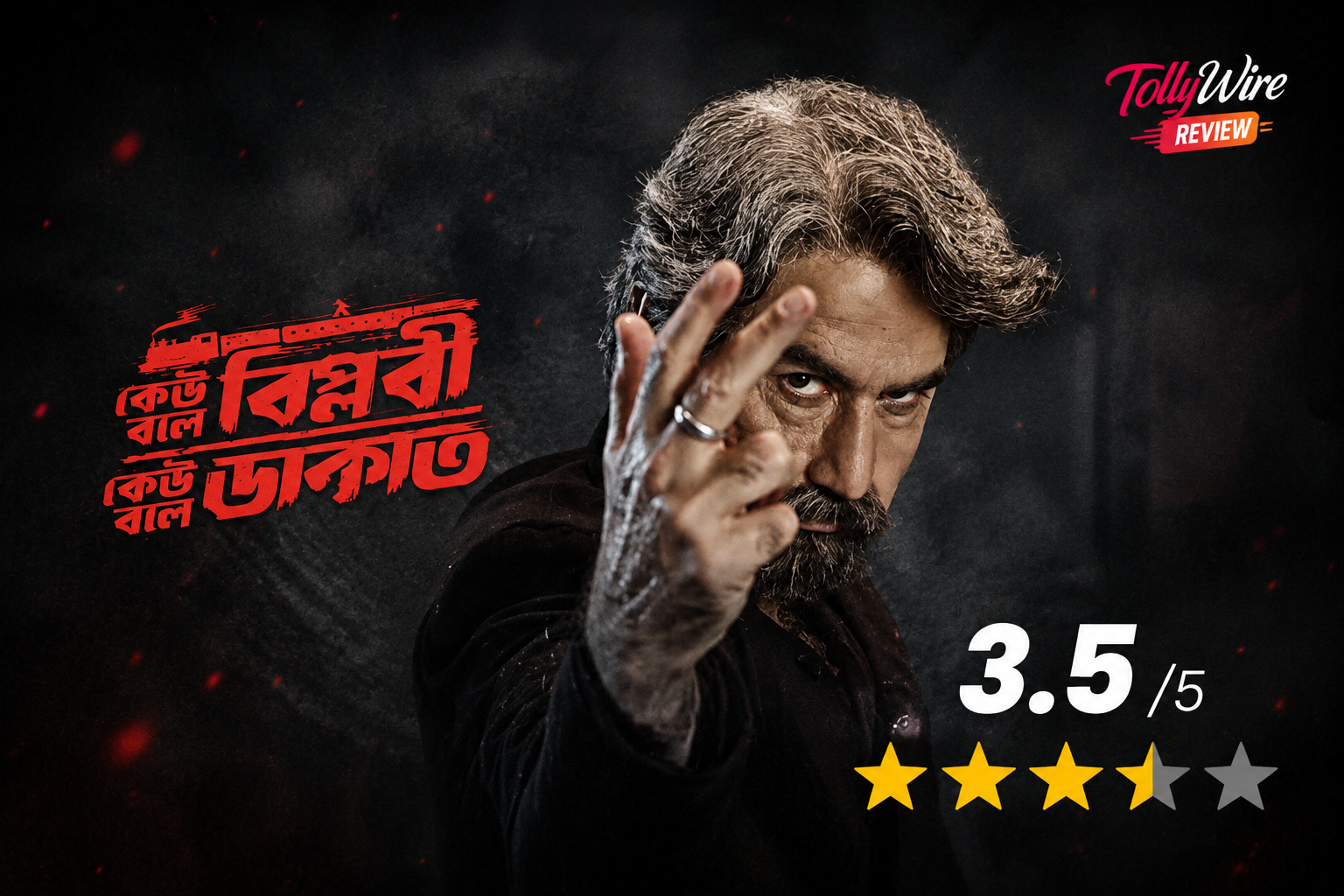
Keu Bole Biplobi Keu Bole Dakat Review: Directed by Pathikrit Basu and starring Jeet in the lead, Keu Bole Biplobi Keu Bole Dakat is an ambitious Bengali historical drama that blends revolution, action and human conflict. The film attempts to explore a fascinating question without giving away the major twists: what happens when a revolutionary’s ideals collide with the reality of a newly independent nation?
With a commanding lead performance, strong supporting actors, impressive music by Shantanu Moitra and an ambitious visual scale, the film has enough substance to make it a worthwhile theatrical watch.
Keu Bole Biplobi Keu Bole Dakat: Story
Without revealing any major spoilers, the film revolves around Ananta Singh, a revolutionary who has been part of India’s freedom struggle.
But the film’s real journey begins when the country enters a new chapter.
As Ananta Singh encounters a changed social reality, questions surrounding freedom, justice, ideals and identity gradually become central to the narrative. The film explores the circumstances that lead a revolutionary towards a completely different identity.
The screenplay does not simply ask who is a hero and who is a criminal. Instead, it creates a grey zone where history, circumstances and society influence how a person is remembered.
That central idea gives Keu Bole Biplobi Keu Bole Dakat its strongest hook.
Jeet Is the Biggest Highlight
Jeet delivers an outstanding performance.
The actor completely embraces the physical and emotional demands of the character. His screen presence is powerful, particularly during the intense dramatic and action sequences.
What works especially well is the conviction with which Jeet portrays the character’s internal conflict. He doesn’t merely play the action hero; there is an emotional weight behind the character that makes the performance considerably more engaging.
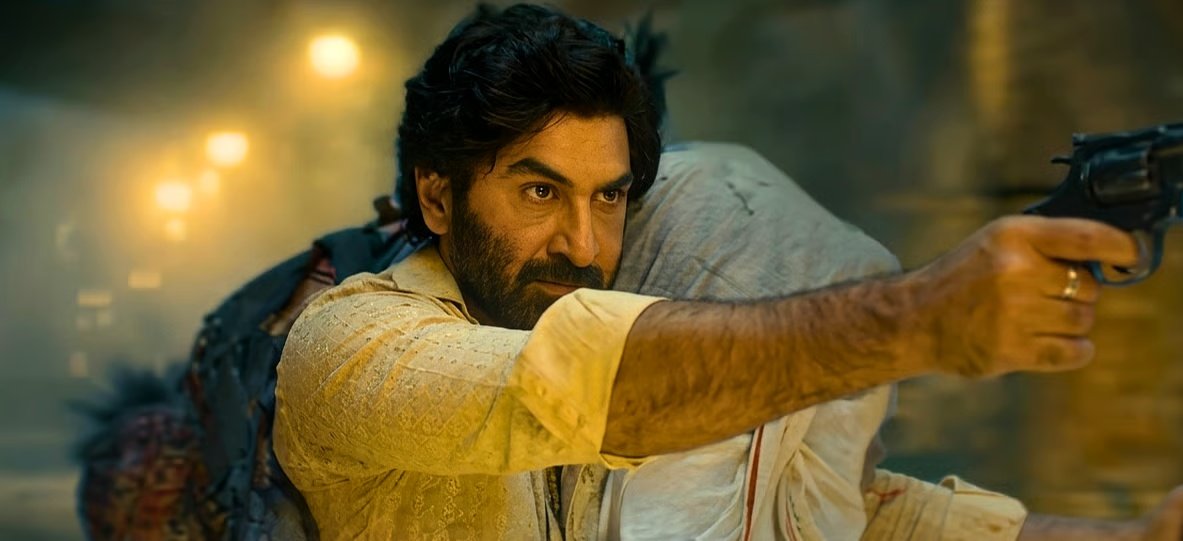
For Jeet fans, this is definitely a performance worth watching on the big screen.
Tota Roy Choudhury Makes a Strong Impact
Tota Roy Choudhury is another major positive.
Playing a police officer, he brings authority and restraint to the role. His dialogue delivery is particularly effective, and several of his scenes stand out because of his strong screen presence.
His character also provides an interesting contrast to Jeet’s character, adding tension to the narrative without revealing anything about the story’s major developments.
Supporting Cast
Loknath Dey Loka makes a strong impression as Surya Sen.
Durbar Sharma does well within the limited screen time he receives, while Kaushik Sen delivers a dependable performance. Chandan Sen is also effective in his comparatively limited role.
Debottama Saha makes an impact despite appearing for a short duration.
Priyanka Sarkar has a very small role and consequently gets limited opportunity to make a significant impression.
Pathikrit Basu’s Direction
Director Pathikrit Basu deserves credit for attempting a film of this scale and subject matter.
The film has a clear sense of ambition, particularly in its recreation of a historical period and its combination of drama and action.
Basu keeps the narrative largely engaging and manages to create several effective moments.
However, the film is not without flaws. Some portions of the screenplay feel uneven, and certain developments could have been tighter. A little more consistency in pacing and transitions could have made the overall experience stronger.
Still, Pathikrit Basu succeeds in delivering an engaging historical drama.
Story & Screenplay
The writing by Aritra Banerjee and Arpan deserves appreciation for choosing an unusual perspective.
Rather than presenting a straightforward revolutionary narrative, the screenplay focuses on the transformation of identity and the circumstances surrounding it.
The film’s biggest strength is the central conflict between revolutionary ideals and post-Independence reality.
At the same time, some logical gaps and uneven portions prevent the screenplay from reaching its full potential.
Importantly, the film manages to maintain enough mystery around its central character without unnecessarily revealing everything in advance.
Music & Background Score
Shantanu Moitra’s music is one of the film’s strongest technical highlights.
The songs fit naturally into the film’s period atmosphere and emotional landscape. They complement the story rather than feeling like standalone additions.
The background score is also effective, particularly during the film’s dramatic and action-heavy sequences.
Cinematography & Action
The film looks impressive on the big screen.
The cinematography captures the period setting effectively, while the visual treatment gives the film an appropriately grand and atmospheric feel.
The action sequences are another positive. They are energetic and contribute to the overall cinematic scale of the film.
For viewers who enjoy historical action dramas, the technical presentation adds to the theatrical experience.
The makeup work by Somnath Kundu deserves special appreciation. The character looks, period detailing and overall transformation have been handled with great attention to detail. The makeup plays an important role in making the characters believable within the film’s historical setting.
Somnath Kundu’s work is one of the film’s notable technical strengths,
What Works
- Jeet’s outstanding performance
- Strong screen presence of Tota Roy Choudhury
- Loknath Dey Loka as Surya Sen
- Interesting historical premise
- Shantanu Moitra’s music
- Effective background score
- Good cinematography
- Well-executed action
- Ambitious production scale
What Doesn’t Work
- Screenplay becomes uneven in places
- A few logical gaps
- Some portions could have been tighter
- Certain supporting characters have limited scope
- Pacing could have been more consistent
Final Verdict
Keu Bole Biplobi Keu Bole Dakat is an ambitious Bengali historical drama that attempts something different.
The film’s biggest strength is undoubtedly Jeet, who delivers an outstanding performance and carries the emotional weight of the story. Tota Roy Choudhury is equally effective, while the supporting cast adds value to the overall narrative.
Pathikrit Basu’s direction, Shantanu Moitra’s music, the cinematography and action contribute significantly to the film’s appeal.
It is not a perfect film, and the screenplay does have its weak moments. But the central concept, performances and overall scale make it a worthwhile theatrical watch.
And without revealing any spoilers, the film leaves you with an intriguing question:
When history labels someone a revolutionary or a dacoit, how much of that identity is determined by the person—and how much by the circumstances around them?
